
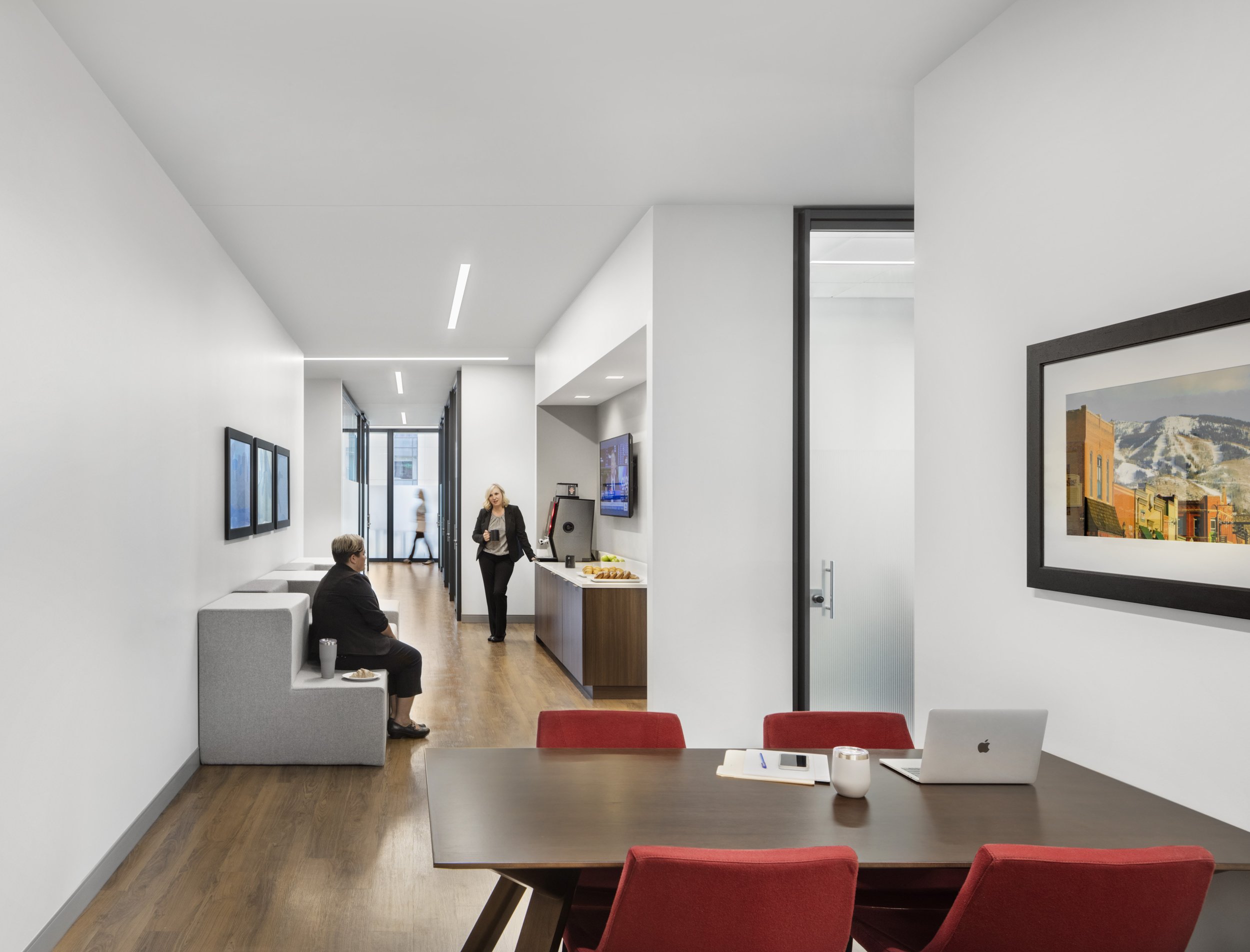
Coworking has reshaped how the world approaches work. Once a flexible alternative for freelancers and startups, it’s now a standard for how professionals of all types get things done.
This article explores what coworking is, how it began, the benefits of coworking, the different types of coworking spaces, and how it has transformed in the years since remote and hybrid work became the norm. It also looks at the difference between coworking and proworking, and provides a checklist to help you determine whether coworking is right for you.
What Is Coworking?
Coworking refers to the use of a shared workspace by individuals or teams who are not employed by the same organization.
These environments bring together a variety of professionals from freelancers to small business owners, remote employees, and entrepreneurs. They share access to office amenities, meeting rooms, and common areas without the commitment of a traditional lease.
The modern coworking movement began in the early 2000s, when a wave of startups and independent professionals sought flexible, affordable alternatives to long-term office rentals.
Early coworking spaces offered a refreshing departure from the corporate office, designed instead around openness, collaboration, and community.

At its core, coworking was built on three principles: openness, flexibility, and connection. The idea was that by sharing space and resources, people could also share ideas, opportunities, and energy.
Over time, there have been several different types of coworking spaces that have developed:
Types of Coworking Spaces
- Hot desks, where members can choose any available seat.
- Dedicated desks, offering a consistent personal workspace within a shared area.
- Private offices, for teams or individuals seeking more privacy while retaining access to shared amenities.
- Hybrid memberships, which blend remote work with occasional in-person workspace access.
These spaces became especially popular among freelancers, startups, and remote-first companies drawn to the promise of professional infrastructure without high overhead.
A Brief History of Coworking
Coworking emerged from decades of experiments in shared space, community, and flexibility, and then accelerated as technology and work preferences changed.
Precursors to Coworking (1995–2004)
- 1995 — c-base, Berlin: One of the first hackerspaces, c-base created a community-operated venue for coders and technologists. These spaces are widely viewed as precursors to modern coworking.
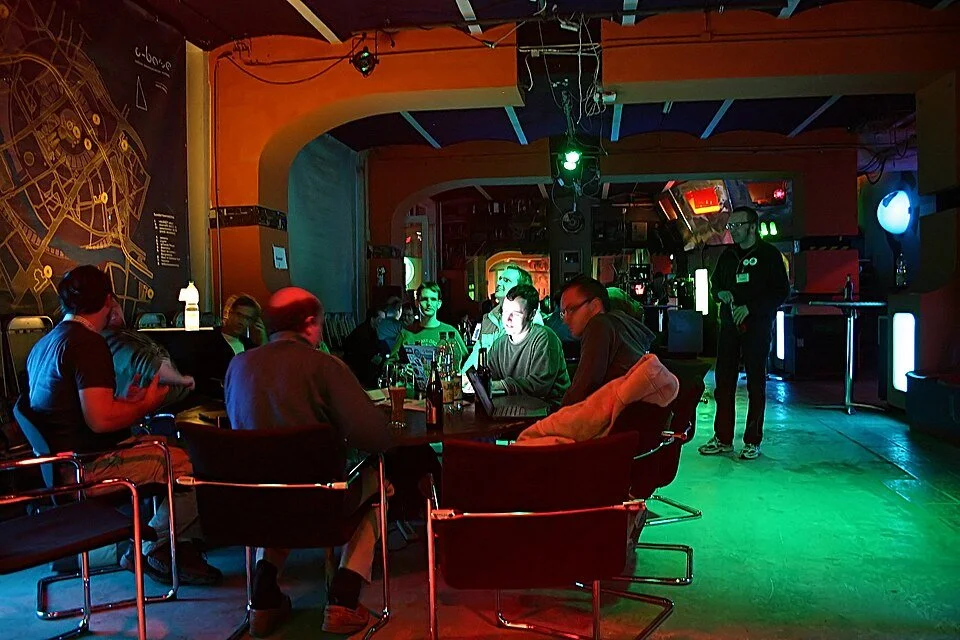
Image: c-base, Berlin.
- 1999 — 42 West 24, New York City: Offered flexible desks for teams and individuals. It foreshadowed coworking’s open, adaptable model, but with less emphasis on community.
The Coworking Concept Takes Shape (2005)
- Brad Neuberg’s vision: Brad Neuberg coined the term coworking in its current usage and launched a new kind of workspace in San Francisco that would support the community and structure that he wanted.
- Spiral Muse: Neuberg opened the San Francisco Coworking Space inside Spiral Muse, operating a few days a week. The first official member was Ray Baxter, a startup developer.

Image: The first coworking space at Spiral Muse in San Francisco.
- The Hat Factory: Neuberg and collaborators moved to the Hat Factory, regarded as the first full-time coworking space.
- Parallel pioneers: The same year saw key openings that signaled a movement. The Hub (Angel Station, London), which later became a global franchise network, and St. Oberholz (Berlin), an early café offering free internet that encouraged work-from-anywhere habits.
Early Expansion (2006–2012)
- 2006 — Brooklyn Coworking: New York City’s first coworking space opened, and the company Jelly encouraged remote workers to gather and work together (spreading to cities like Austin and Phoenix by 2007).
- 2009 — GCUC founded: The Global Coworking Unconference Conference was formed, becoming an enduring industry touchpoint.
- 2012 — Scale achieved: The global count surpassed 2,000 coworking spaces, cementing coworking as a mainstream option.
Maturation and Global Brands (2013–2021)
By 2021, dozens of major providers operated worldwide. Large brands (e.g., Impact Hub, WeWork, Industrious, and others) expanded across multiple cities, while many independents scaled to 5–10 locations, often dominating specific regions or niches.
Where Is Coworking Now?
- With the rise of side hustles and the increasing prevalence of flexible and remote work, the number of coworking spaces in the United States is estimated to be 7,695.
How Has Coworking Evolved?
The COVID-19 pandemic marked a defining shift in how and where people work. Practically overnight, remote work became a global norm. What began as a temporary solution soon reshaped expectations entirely.
According to a Robert Half study, 76% of people are influenced to stay with an employer if they offer flexibility of when and where they work. And, 53% of U.S. employees with remote-capable jobs are currently working in a hybrid setup.
Even years after offices reopened, occupancy rates hover around 54.2% of pre-pandemic levels. The traditional office, once a daily destination, is no longer the default.
In this new landscape, a third option emerged: a “third place” for work. Coworking spaces filled that role, offering professionals the comfort and convenience of an office without the rigidity of a full-time lease. Yet, as work culture continued to evolve, so did coworking itself.
Below are the key ways coworking has transformed in the years since 2020:
1. Flexibility Is the New Baseline
Once professionals experienced the freedom of remote work, few wanted to return to rigid schedules. Coworking spaces adapted by offering flexible memberships, allowing people to use the space only when they need it.
2. Community Fills the Social Gap
While remote work offers autonomy, it can also lead to isolation. Many professionals miss the informal interactions that once defined office life. Coworking became a middle ground to find social connections without the structure of corporate culture.
3. Tech Support Becomes Essential
In the early days of remote work, tech problems could derail an entire day. Professionals began to value reliable, on-site IT support as much as fast internet. Modern coworking spaces now prioritize technical infrastructure and assistance to meet these new standards.
4. Private Offices Within Coworking Rise in Demand
As video calls and confidential conversations became daily necessities, open workstations lost their appeal. The demand for enclosed, soundproof offices within coworking environments surged, creating a bridge between traditional coworking and the privacy-first model now known as Proworking.
5. Professional Development as a Perk
Coworking has grown beyond shared desks. Many operators now host skill-building sessions, networking events, and panel discussions. For independent professionals, these offerings bring both learning and exposure, turning the workspace into a hub for growth.
6. Wellness Moves to the Forefront
The pandemic sharpened awareness around mental and physical well-being. Coworking spaces responded with wellness-focused design: ergonomic furniture, natural lighting, meditation rooms, and even aromatherapy.
7. Corporate Adoption Expands
What began as a freelancer-driven model is now attracting global corporations. Many companies use coworking spaces for hybrid teams or satellite offices, giving employees local options while reducing long-term real estate commitments.
8. Customization and Enterprise Flexibility
Coworking operators are increasingly offering tailored solutions like branded suites, adaptable layouts, and scalable contracts. As larger companies enter the market, the line between coworking and traditional leasing continues to blur.
9. A Stabilizing Force in Commercial Real Estate
With traditional office demand still below pre-pandemic levels, flexible workspaces have become a stabilizing presence in commercial real estate. Executives are rethinking space strategies, investing in flexibility rather than footprint.
What Are the Main Benefits of Coworking?
For many professionals and small businesses, coworking benefits include accessibility, convenience, and flexibility. Here’s a full list:
Accessibility
Coworking makes premium work environments attainable without the high costs of a long-term lease. Members gain access to central business districts, modern design, and professional amenities, often for a fraction of what it would cost to secure a private office independently.
Flexibility
One of coworking’s greatest strengths is its adaptability. Month-to-month memberships and customizable plans allow individuals and teams to scale their use of space as their needs change. Whether someone needs a desk once a week or a private office for a growing team, coworking offers options that fit.
Networking and Community
For many, coworking provides a built-in network. Shared spaces bring together professionals from a range of industries, creating opportunities to connect, collaborate, and share ideas. This environment can be energizing, especially for freelancers or remote workers who miss the social interaction of traditional office life.
Convenience
Coworking spaces are designed for simplicity. High-speed internet, meeting rooms, printing services, and administrative support are ready from day one. Members can focus on their work without worrying about setup, maintenance, or logistics.
Scalability
For startups or companies testing new markets, coworking offers the ability to grow or downsize quickly. Teams can expand into larger offices or revert to smaller footprints as business demands shift, all without the financial strain of breaking a long-term lease.
What Are the Drawbacks of Coworking for Professionals?
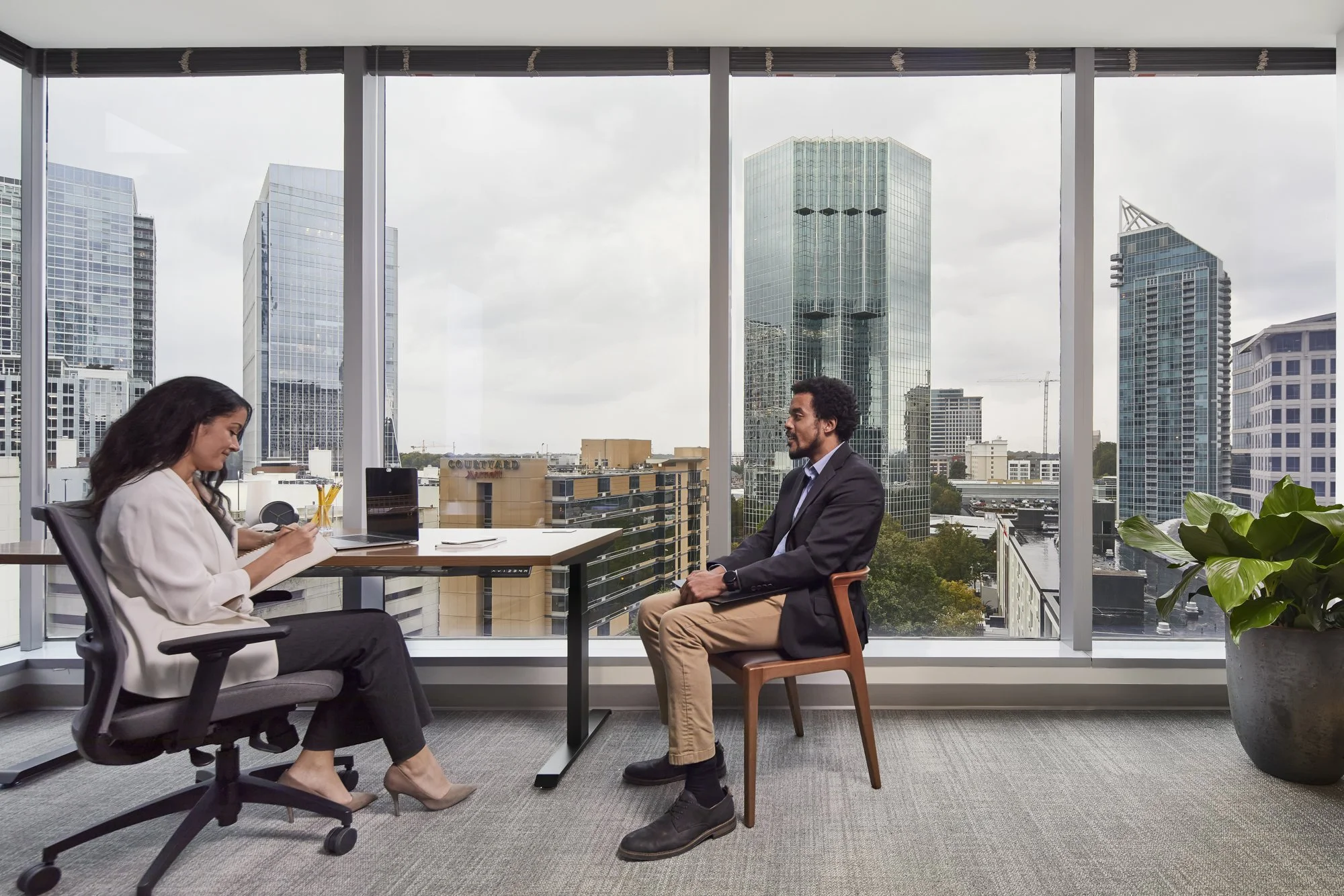
While coworking offers flexibility and convenience, it isn’t without tradeoffs, particularly for professionals whose work demands privacy, precision, and focus.
Lack of Privacy
Most coworking environments are open by design. Desks are shared, conversations are overheard, and confidentiality can be difficult to maintain.
Noise and Distractions
Coworking spaces often thrive on energy and interaction, which can quickly become distractions. Frequent movement, background chatter, and communal areas can make sustained concentration difficult, especially for those who rely on deep, uninterrupted work.
Security Concerns
Shared access points and public Wi-Fi networks can introduce risks that many professionals can’t afford to take. Even with safeguards in place, open environments increase exposure to data breaches or unauthorized access, undermining the security standards required in many fields.
Image and Professionalism
For client-facing professionals, environment matters. Meeting in an open or casual setting can send a message that doesn’t align with the discretion and credibility their work requires. The atmosphere of a coworking space, however modern, doesn’t always match the expectations of high-level clients.
Event-Based Interruptions
Many coworking spaces build community through social events and networking sessions. While valuable for connection, these activities can conflict with the priorities of professionals who prefer calm, uninterrupted environments designed for productivity rather than participation.
For independent professionals and firms handling sensitive information, these drawbacks can be minor inconveniences or dealbreakers. This is where Proworking comes in.
What Is the Difference Between Coworking and Proworking?
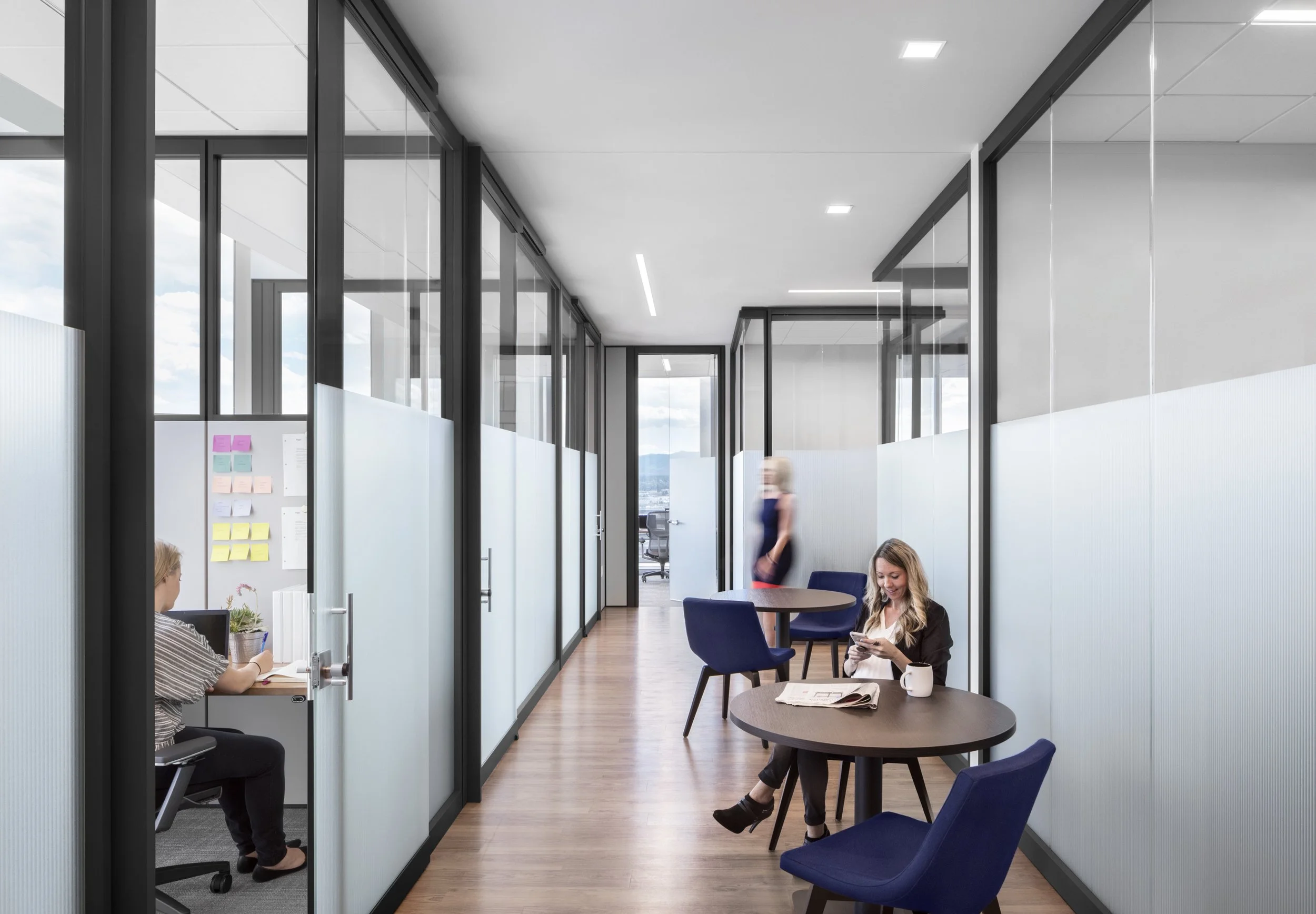
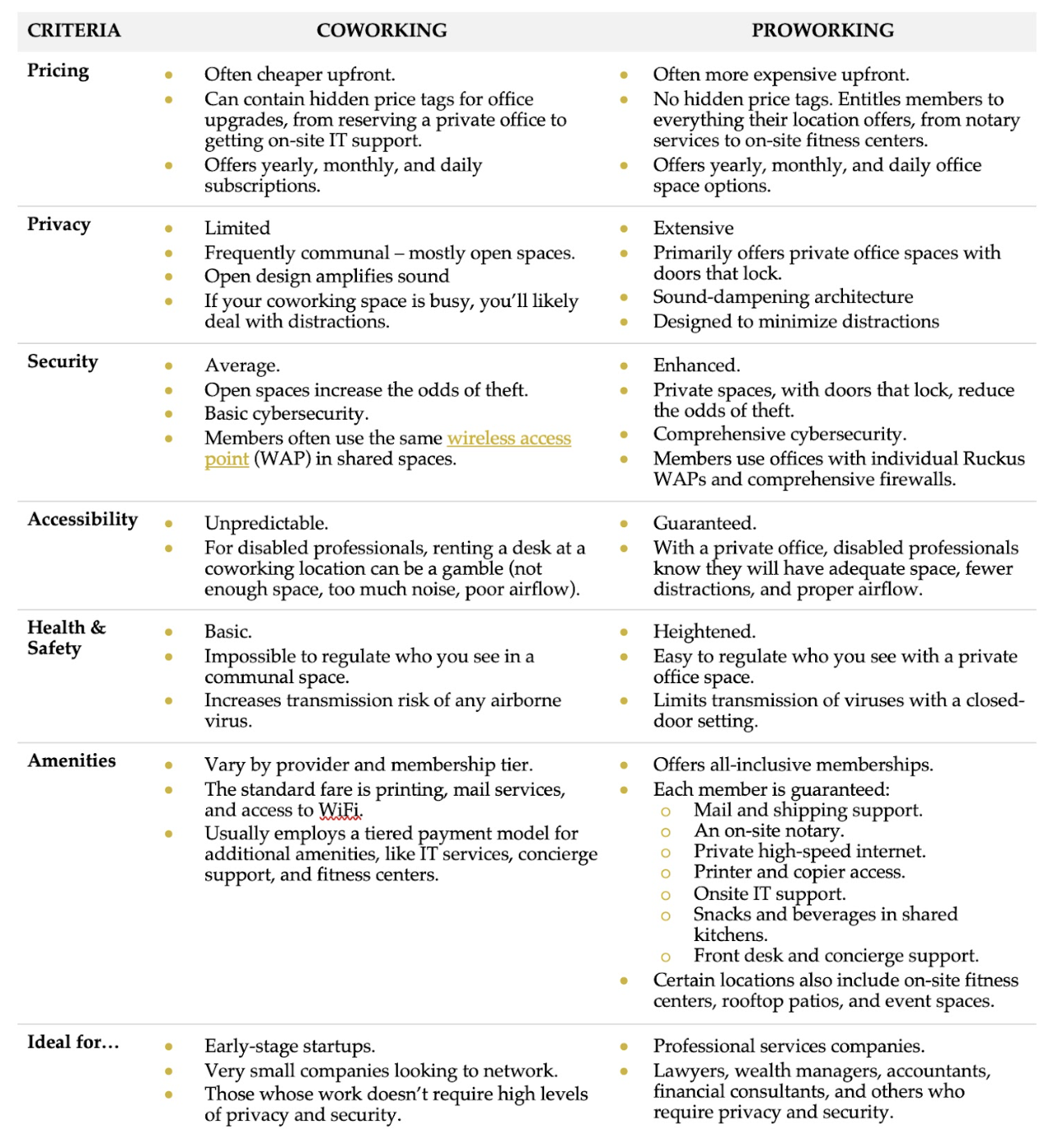
Proworking is the professional evolution of coworking. It’s elevated coworking for those who need privacy, security, and focus to perform at their best. It preserves the flexibility that makes coworking appealing, but elevates the experience with an environment designed for discretion and deep productivity.
At a philosophical level, the two models serve different purposes:
- Coworking is built around community and connection.
- Proworking is built around privacy and performance.
Coworking invites professionals to share ideas and energy in an open environment. Proworking gives them the privacy, quiet, and control they need to deliver exceptional results.
The audience for Proworking typically includes high-performing professionals like attorneys, consultants, wealth managers, financial advisors, real estate executives, and technologists, whose work demands confidentiality and uninterrupted concentration.
Key Differentiators:
- Privacy: Enclosed, sound-masked offices ensure conversations remain confidential and focus remains undisturbed. Memberships are private, preserving discretion across all interactions.
- Security: Keycard access, private VLANs, and secure printing systems safeguard sensitive information.
- Support: Concierge-level service, on-site staff, and all-inclusive amenities provide seamless operational support so members can focus entirely on their work.
Is Coworking Right for Me?
Choosing the right workspace depends on location, cost, and how you work best. Both coworking and proworking offer modern alternatives to the traditional office, but they serve different professional needs.
Coworking may be right for you if:
- You thrive on networking and collaboration with other professionals.
- Your work is not confidentiality-sensitive and can be done comfortably in shared spaces.
- You enjoy a social, open environment that blends productivity with community.
Coworking supports creativity and connection. It’s ideal for freelancers, entrepreneurs, and small teams who value flexibility and engagement more than privacy or formality.
Proworking may be right for you if:
- You require discretion, focus, and a private workspace to perform at your best.
- You host clients or manage sensitive information that demands secure surroundings.
- You value professional presentation and quiet excellence in both your environment and your work.
Proworking offers the same flexibility as coworking, but in a refined setting built for professionals who take their privacy and performance seriously.
Find Your Perfect Proworking Space
Now that you’ve learned what coworking is, the types of coworking spaces, and what the benefits of coworking are, you can make an informed decision whether coworking is right for you.
But, if you feel like Proworking is right for you, try Firmspace, the private, secure alternative to coworking designed for professionals who take their work and their privacy seriously.
Firmspace offers fully enclosed offices, sound-masking technology, and private VLAN networks. Every location is staffed with an on-site concierge team that ensures a seamless, all-inclusive experience, from secure printing and meeting rooms to refined, business-ready amenities.
If you want to schedule a private tour of Firmspace, we have offices in Austin, Atlanta, Denver, and Houston, intentionally located in premier business districts.
Schedule a private tour and experience Proworking for yourself!