
The legal profession is built on discretion, rigor, and trust. Yet the physical environments in which many attorneys work have shifted over the past decade. Rising lease costs, hybrid schedules, and evolving client expectations have forced firms to reconsider what constitutes an “appropriate workspace.”
A growing number of practitioners are exploring whether a coworking space for attorneys can meet the ethical and operational standards required by their profession.
The question is not whether flexible workspace exists. It is whether it can uphold the duties imposed by the ABA Model Rules of Professional Conduct, particularly Rule 1.6, which requires lawyers to make reasonable efforts to prevent unauthorized disclosure of client information.
The answer depends entirely on design.
1. Is a Coworking Space for Attorneys Appropriate Under Legal Ethics Rules?
A coworking space for attorneys is appropriate only when it protects confidentiality, preserves independence, and enables adequate supervision.
And although many firms are deciding whether to prioritize a physical office space in their budget, the legal sector has not abandoned physical offices.
- Law firms leased approximately 4.6 million square feet of office space in the first quarter of 2025, a 25 percent increase year over year.
- Most firms now operate under hybrid policies that expect attorneys to be in the office at least three days per week.
This data signals something important: law firms are refining their office spaces rather than retreating from them.
Open coworking floors with communal seating, unsecured networks, and audible conversations may create risk. However, a private office for attorneys within a professionally managed environment is fundamentally different.
Enclosed offices, secure network infrastructure, controlled access, and sound-insulated conference rooms satisfy the “reasonable efforts” standard when implemented properly.
2. How Does a Coworking Space for Attorneys Protect Client Confidentiality?
Confidentiality in a coworking space for attorneys must be engineered intentionally. It cannot be assumed.
A survey of flexible workspace users found that 53 percent reported lower productivity in shared environments, while 38 percent expressed concerns specifically about privacy and confidentiality. Notably, 66 percent indicated a preference for private offices, and nearly half cited improved IT security as a primary reason.
These concerns can be applied to the legal practice. Client consultations often involve litigation strategy, financial disclosures, regulatory exposure, or sensitive personal matters. Even the perception of exposure can undermine trust.
Effective legal office space solutions must address four core dimensions:
- Acoustic Privacy: Sound-insulated offices prevent conversations from carrying.
- Visual Privacy: Enclosed spaces eliminate screen and document visibility.
- Digital Security: Enterprise-grade encrypted Wi-Fi protects client data.
- Controlled Access: Reception oversight and keycard systems reduce unauthorized entry.
When these protections are built into the environment, confidentiality can be maintained at the same standard as in a traditional lease.
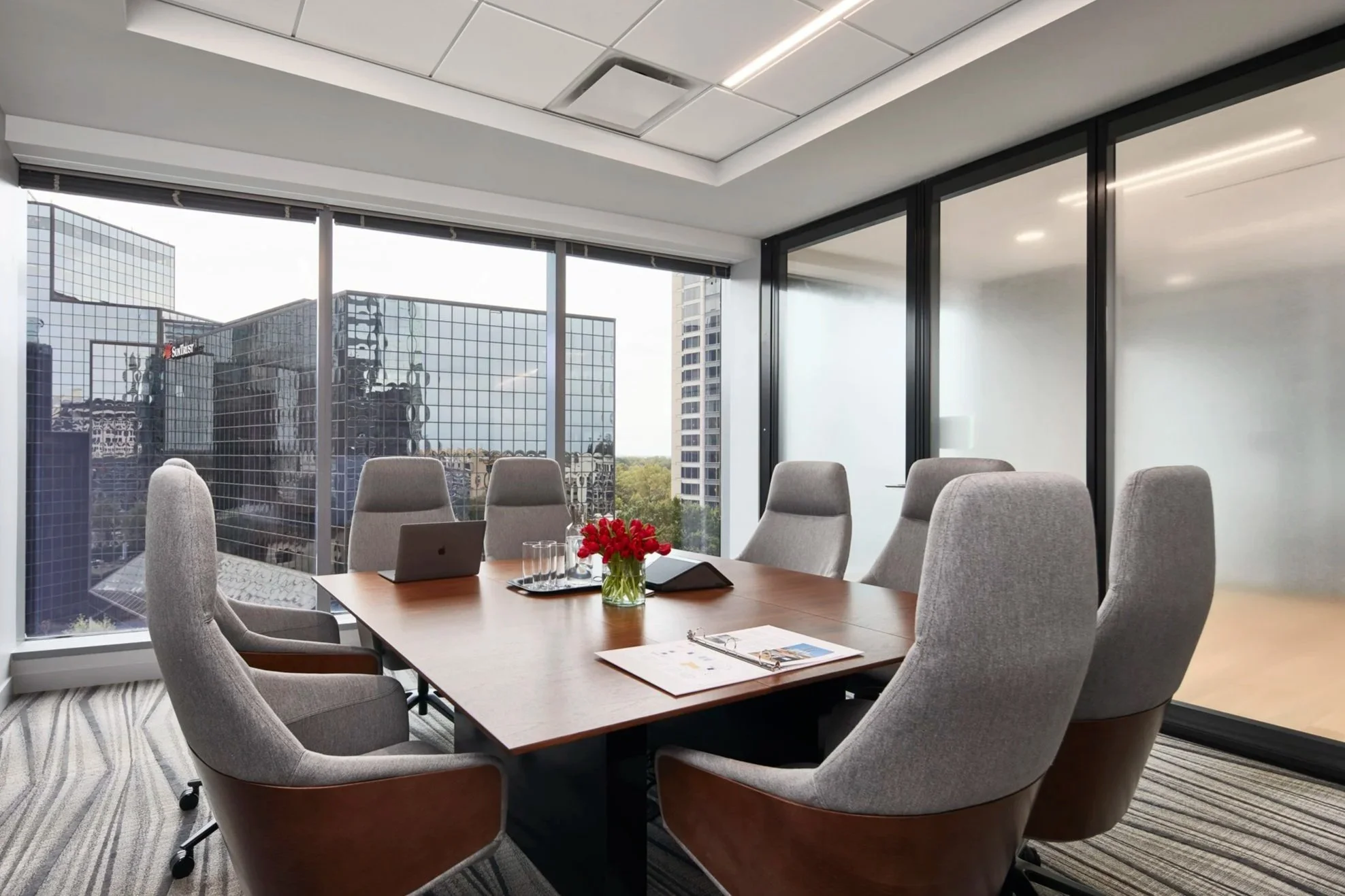
3. What Is the Difference Between a Private Office for Attorneys and a Shared Coworking Desk?
A shared desk model emphasizes flexibility and cost efficiency. It typically involves open seating and rotating occupants, making it the perfect concoction for distractions. While suitable for certain industries, this model rarely aligns with the demands of legal practice.
A private office for attorneys offers:
- Dedicated enclosed space
- Lockable storage
- Secure conference rooms
- Professional reception services
- Consistent client-facing presentation
Legal work requires extended concentration. Drafting motions, reviewing contracts, preparing trial strategy, or negotiating transactions requires uninterrupted focus. A quiet, private space can improve focus by 48% and decrease stress by 27%.
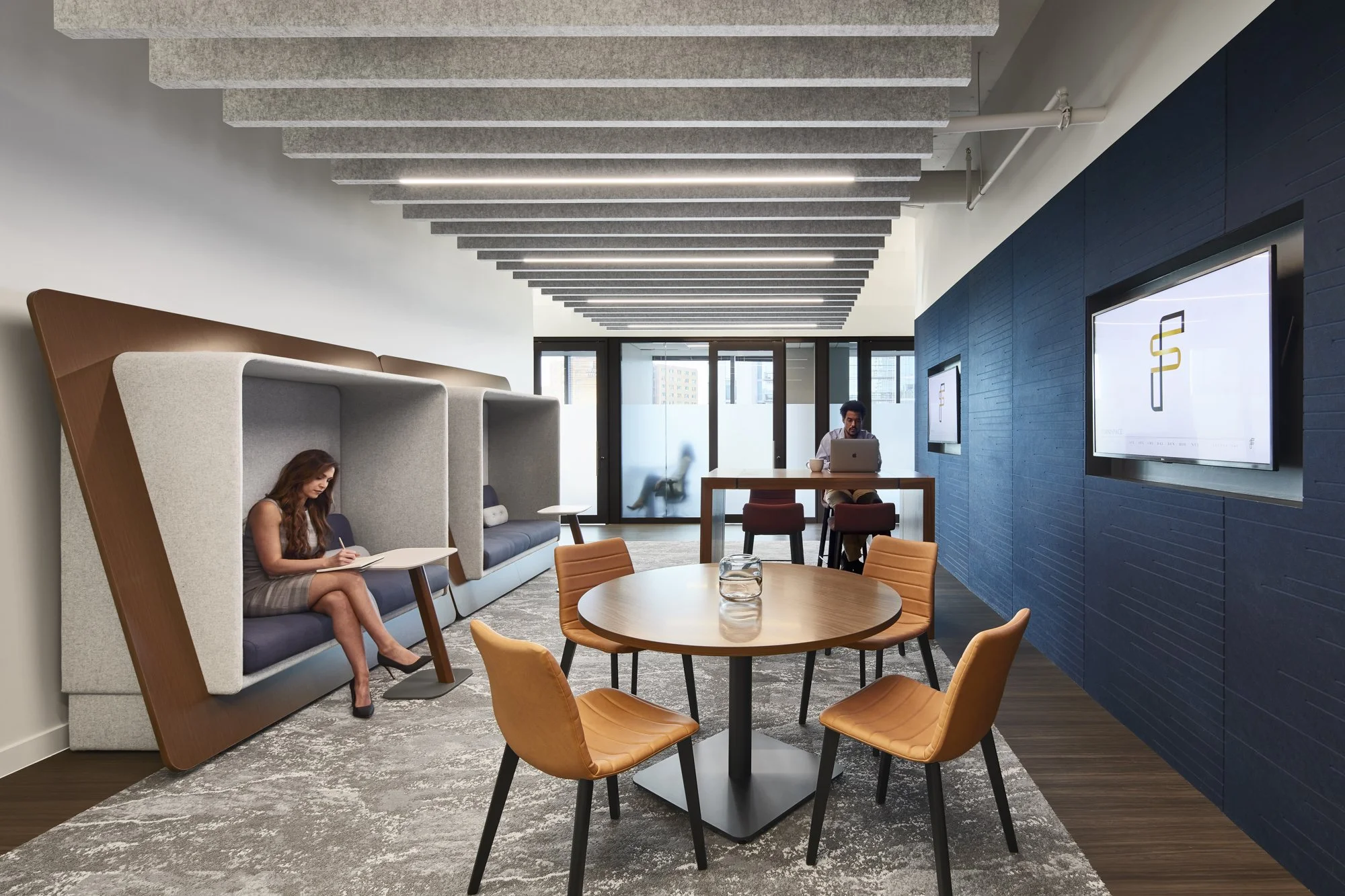
4. Are Coworking Spaces Compliant With ABA Guidelines and State Ethics Rules?
Coworking spaces can comply with ABA and state ethics requirements when reasonable safety measures are in place.
With 83% of law firms now operating under formal hybrid policies, and approximately 78% of legal professionals expressing a desire for flexible work arrangements, the profession has adapted structurally, but ethical obligations remain unchanged.
State bar opinions generally permit shared office arrangements provided that attorneys:
- Protect confidential information
- Avoid misleading firm representations
- Maintain secure document storage
- Supervise non-lawyer personnel appropriately
A professional office space for lawyers that provides enclosed suites, secure mail handling, controlled conference rooms, and encrypted networks can meet ethical standards. A casual, open coworking floor without safeguards may not. In the end, the responsibility remains with the attorney.
5. What Security Features Should a Legal Office Space Solution Include?
Security in legal office space solutions must address both physical and digital risk.
Lack of privacy is one of the strongest predictors of dissatisfaction and distraction in office environments. For attorneys, distraction is more than inconvenience. It increases the likelihood of error in detail-oriented work.
At a minimum, attorneys should look for:
- Fully enclosed, lockable offices
- Sound-insulated meeting rooms
- Controlled building and suite access
- Secure mail and package handling
- Enterprise-grade encrypted Wi-Fi
- Professional on-site staff oversight
- Secure printing and document disposal
Firms handling healthcare, financial, or corporate matters may also require additional cybersecurity protocols.
To get the most out of a coworking space for attorneys, security must be the prime infrastructure of the office space. Without proper procedures in place, your clients mayfeel a lack of trust and confidence in your ability to handle their case.
6. Is Coworking Office Space for Law Firms More Cost-Effective Than a Traditional Lease?
Cost-effectiveness must be measured holistically.
Traditional commercial leases often require multi-year commitments, buildout costs, furniture procurement, IT installation, and ongoing maintenance responsibility. These upfront expenditures can be hard to manage, particularly for boutique firms or growing practices.
Many firms allocate roughly 500 square feet per attorney. It’s expected that this figure will decrease as space efficiency improves. Flexible private office models allow firms to scale more precisely in line with actual utilization, reducing wasted square footage while maintaining professional standards.
Cost savings should never compromise compliance. However, when privacy and infrastructure are built in, a coworking office space for law firms can reduce overhead while preserving credibility and performance.
Private coworking office spaces like Firmspace are built for attorneys with all of this in mind. Their space provides soundproof offices, refined shared spaces, and enterprise-level security that top-rated lawyers expect as they deal with sensitive matters.

Why Firmspace Works for Attorneys and Legal Professionals
The legal profession is evolving. Remote hearings, digital filings, and hybrid schedules are now common. Yet the core responsibilities of confidentiality and diligence remain constant.
Workspace decisions should reflect those responsibilities.
Firmspace environments are intentionally structured around private offices, controlled access, secure conference rooms, and refined interiors that reflect the seriousness of legal practice. We’re not a casual coworking space. We believe in Proworking: professional infrastructure and private offices designed for confidentiality and focus.
For attorneys managing litigation, corporate negotiations, estate planning, or regulatory matters, the environment influences execution. Noise introduces risk. Exposure erodes trust. Interruption diminishes judgment.
A coworking space for attorneys can meet ethical and operational standards when privacy, security, and professionalism are engineered into the space from the outset.
For attorneys seeking an environment aligned with the standards of their profession, choose Firmspace. Book a tour today.